BPC-157 TB-500 MOTS-c the entire peptide process 2026
Peptides are short chains of amino acids joined by peptide bonds. Understanding how peptides are made shows why modern manufacturing can deliver exact sequences at research or commercial scale.
Most custom and therapeutic peptides are built by chemical synthesis. The dominant method is solid-phase peptide synthesis (SPPS), developed by Bruce Merrifield. The C-terminal amino acid is anchored to an insoluble resin. Each cycle then deprotects the N-terminus (typically Fmoc removal with base), activates the next protected amino acid with coupling reagents, forms the new peptide bond, and washes away excess reagents. The cycle repeats from C-terminus to N-terminus until the full sequence is assembled. The finished chain is cleaved from the resin, side-chain protecting groups are removed, and the crude peptide is purified by HPLC. Mass spectrometry and other analytics confirm identity and purity.
Shorter peptides may use liquid-phase peptide synthesis (LPPS). Longer chains or peptides that need post-translational modifications are often produced recombinantly: a synthetic gene is inserted into bacteria or yeast, the cells express the peptide during fermentation, and the product is isolated and purified. Hybrid approaches combine fragment synthesis with ligation.
Protecting groups, coupling efficiency, and purification determine final quality. These processes enable research peptides, modified sequences, and scalable production while maintaining sequence fidelity. Watch the video to see the full manufacturing workflow from resin loading to finished peptide.
More videos

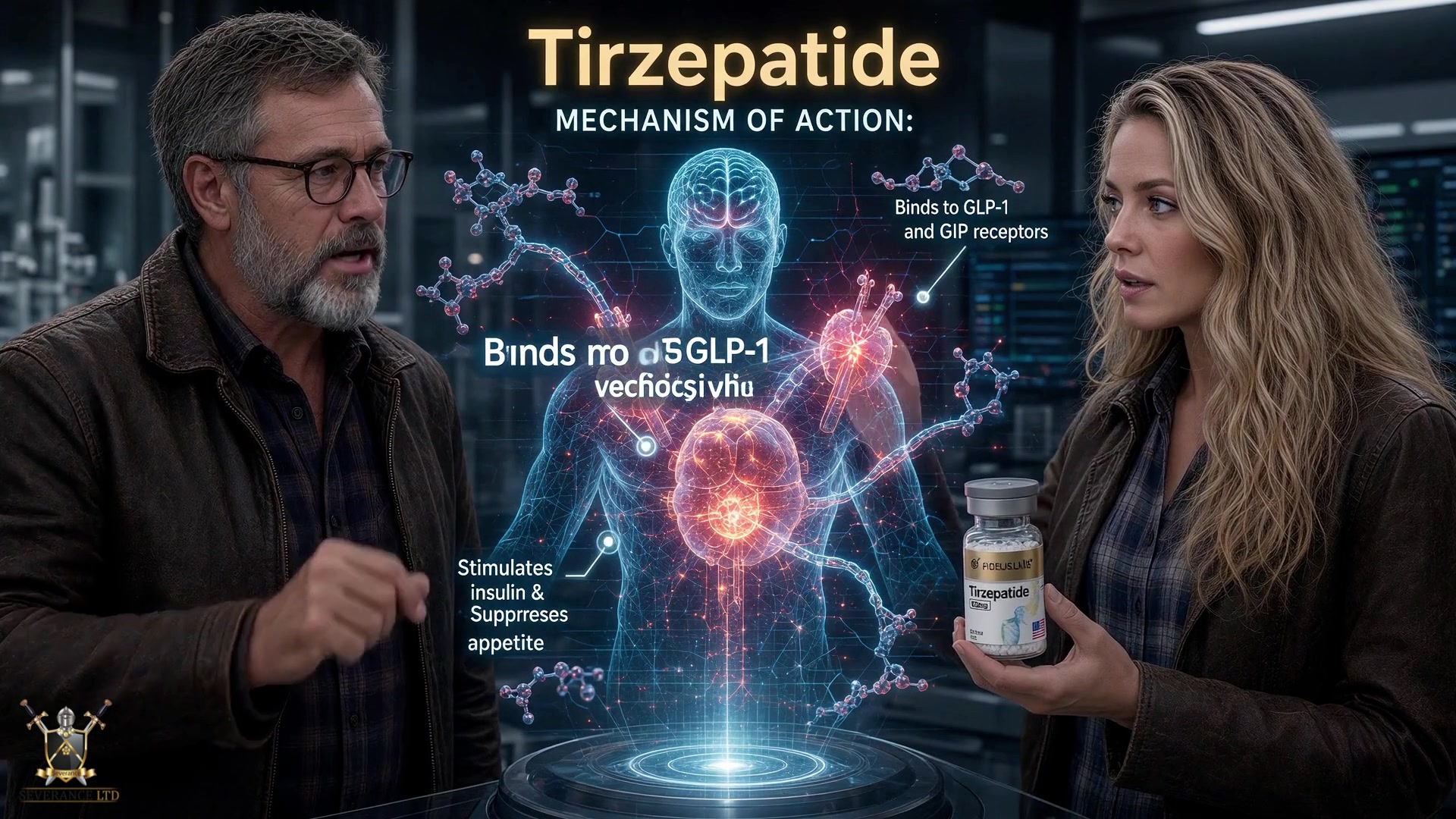
What Is Tirzepatide? Dual GIP/GLP-1 and Why Should I Use It Twincretin Explained (2026)
How Is MOTS-c Manufactured? Peptide Synthesis, Sequence & Purity (2026)
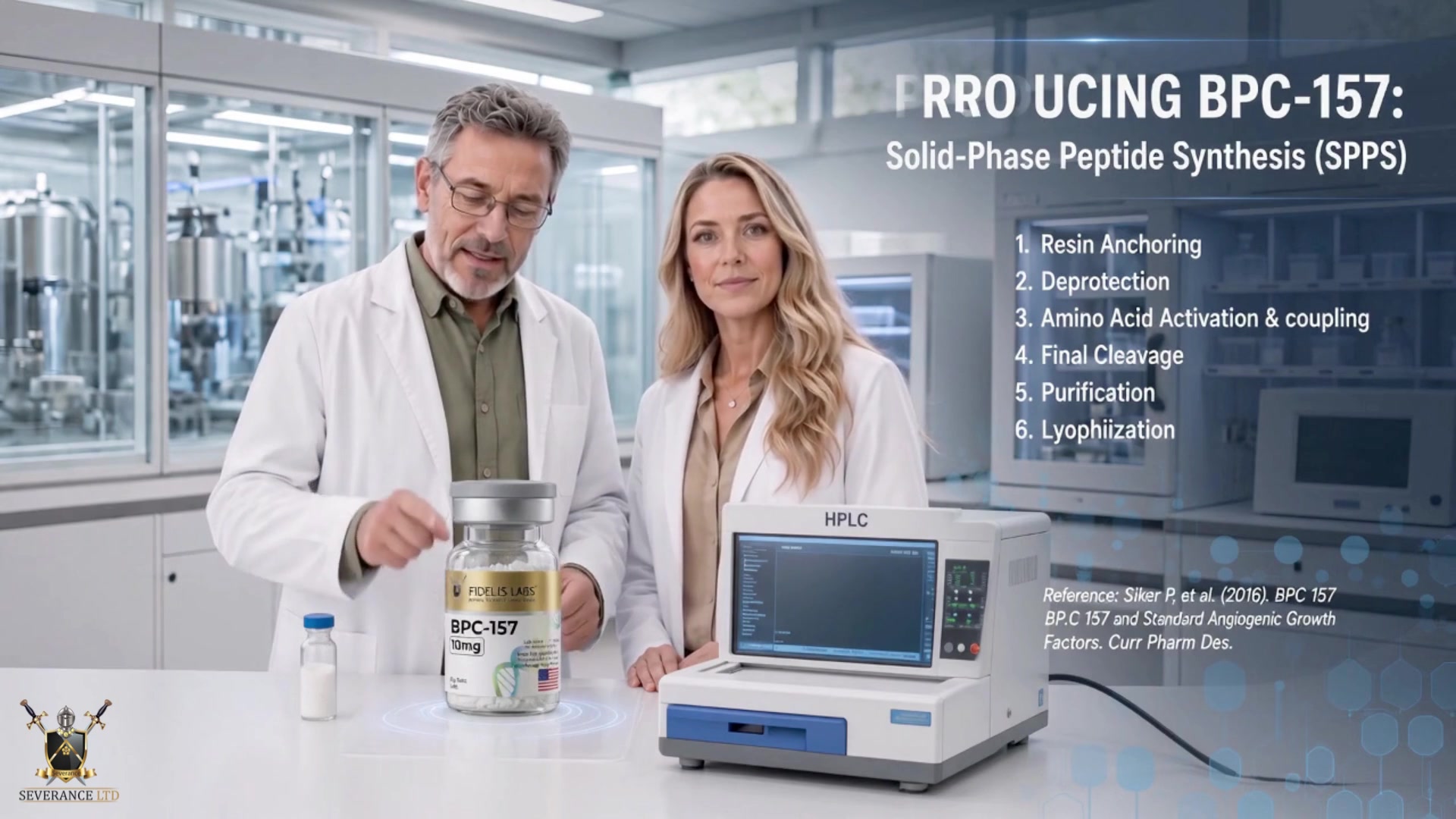
How Is BPC-157 Made? Peptide Synthesis, Sequence & Purity Explained

Research Peptides Shipped From USA ALWAYS. No overseas waiting. Steroids, Peptides, Semaglutide, Tirzepatide, GLP-3 RT, KLOW, Wolverine Stack

Steroids, Peptides, Tripeptide, Semaglutide, GLP-3 RT, ships from USA 15% discount code